.svg)
.png)
.avif)



Why Wishful Thinking Makes You Bad At Money

.avif)

Key Takeaways:
- Wishful thinking feels productive but keeps you reactive and worried about money.
- Tracking past spending isn’t planning—it doesn’t help you decide confidently.
- Giving every dollar a job with YNAB replaces hope with clarity and control.
For a long time, I genuinely believed my money situation would improve if I just smiled and stayed optimistic enough.
Not strategic. Not intentional. Mostly vibes.
I wasn’t doing nothing—that’s important. I was tracking my spending. I was checking my accounts. I just wasn’t actually engaging with my money. I was watching it, worrying about it, and quietly wishing my circumstances would change without me having to fundamentally change anything else.
If you’ve ever worried about money, you might recognize some of these wishful thinking money habits:
- Deleting and re-downloading your banking app in hopes the numbers will look better this time
- Tracking every dollar after it was already gone and feeling vaguely virtuous about it
- Starting a new spreadsheet—this time color-coded—convinced the formatting would be the breakthrough
- Checking your bank balance repeatedly, as if more clarity would appear with enough refreshes
- Whispering an affirmation before checking your balance
- Rearranging your couch cushions—not for spare change, just to feel in control of something
- Squinting at your money tracking app like it owes you answers
- Considering getting really into couponing, but only aesthetically
- Treating “someday” as a very real financial plan
Can you relate?
I remember hovering my mouse over the big button to buy a plane ticket for a special trip with my best friend, mentally adding things up in my head while pretending everything was fine—even though I’d already checked my balance three times that day. Nothing had changed since the last time I looked, but I checked again anyway.
Without a plan to guide me, every decision felt risky, and I never had the peace that comes with clarity.
.avif)
Not pictured: the money stress that showed up because this trip wasn’t fully funded
None of this wishful thinking made me reckless or irresponsible. It just kept me stuck in a bad with money state. Because underneath all that tracking and checking and hoping was the same constant hum of worry: Am I okay? Am I missing something? Why does this still feel so hard?
Wishful Thinking Isn’t Optimism—It’s Money Worry in Disguise
Here’s what I didn’t understand at the time: wishful thinking is just another form of money worry.
When you’re relying on hope instead of a plan, you’re still reacting to your money instead of directing it. You’re still bracing for the next surprise, still unsure whether you can actually afford what you’re spending, still feeling like everyone else has figured something out that you somehow missed.
That was me. I thought I was “doing money” because I was tracking dollars, but really I was just documenting the chaos. I knew where my money went, but I had no say in where it was going.
Everything changed the day that finally clicked.
“You’ve Never Done Money Like This Before”
I remember watching a YNAB live workshop and my first teacher, Dave, said (very plainly in his charming accent):
You’ve never done money like this before.
And something in me just stopped.
Because he was right. I had never really done money at all. I had spent years hoping my circumstances would change—hoping I’d make more, hoping expenses would calm down, hoping I’d move my car on the right day for street cleaning and avoid the ticket this time, hoping I’d feel more confident once things were finally “better.”
But I hadn’t actually changed my mindset, and I definitely hadn’t made a real plan for my money.
What YNAB showed me was that getting good at money isn’t about tracking harder or restricting yourself more. It’s about deciding—ahead of time—what you want your money to do, based on what actually matters to you.
That shift from hoping to deciding is where the worry starts to loosen its grip. Sure, I still love a good affirmation, but now it comes with a plan.
What Getting Good at Money Looks Like in Real Life
One long-time YNABer, Dennis, perfectly summed up this shift from money worry to confidence:
(1).avif)
My credit card debt was rising every month until I found YNAB. I lived life without a plan. YNAB just clicked for me. Suddenly, I knew where my money was going and I wasn’t happy about it.
I fully committed to the YNAB fundamentals and am more than $30,000 better off than I was. I’ll even pay off the rest of my credit card debt THIS YEAR! I’m so freaking excited about it.
My YNAB membership category represents the mindset shift I needed to go through. Also, it’s representative of all the annual subscription services that USED to sneak up on me.
Now I fund what I want intentionally and when the bill comes due, the money is already there!
That’s not luck, and it’s definitely not wishful thinking. That’s what happens when you stop living reactively and start giving every dollar a job.
The same thing happened for Chelse H., but in a way that looked less like “fixing a problem” and more like finally making room for what mattered most in her life:
.avif)
Since discovering YNAB in 2019, my husband and I have experienced a wonderful shift in how we approach money together. Although we’d always partnered on financial decisions, we often felt uncertain about where our money was really going and struggled to make progress toward our bigger dreams.
We used to talk about things we hoped to do ‘someday,’ but they never seemed within reach. That changed when we started watching YNAB videos, especially one with Hannah on setting up a ‘Wish Farm.’ Inspired, we created a category called ‘Winter Wonderland Holiday’ for a family trip to a snowy destination over Christmas.
YNAB gives us the peace of knowing that our goals, especially those related to family, have a dedicated place.
We realized that, with intentionality, our dreams could move from wishful thinking to ‘spendful’ reality. We aren’t frugal; rather, we’re intentional.
This is the deeper lesson I wish I’d learned sooner: your money situation doesn’t change when you hope harder or worry more. It changes when you make intentional trade-offs and give yourself permission to fund what you actually care about.
What Planning Looks Like (and Why It Changes Everything)
Another thing (the list was long) I didn't understand about money before I found YNAB: planning isn’t about predicting the future perfectly. It’s about giving the money you have right now a purpose, so you’re not relying on hope to carry you through. That's the YNAB method: give every dollar a job.
When you use YNAB, you don’t start by asking, What do I usually spend? You start by asking a much more powerful question: What do I want this money to do for me before I get paid again? That question alone puts you in the driver's seat.
In practice, that means opening the app and making a few clear decisions with the money you have right now.
You give some money to rent. Some to groceries. Some to gas. Some to the things you know are coming—even if they’re months away. Subscriptions. Car repairs. Holidays. The stuff that used to “sneak up on you” suddenly has a place to land.
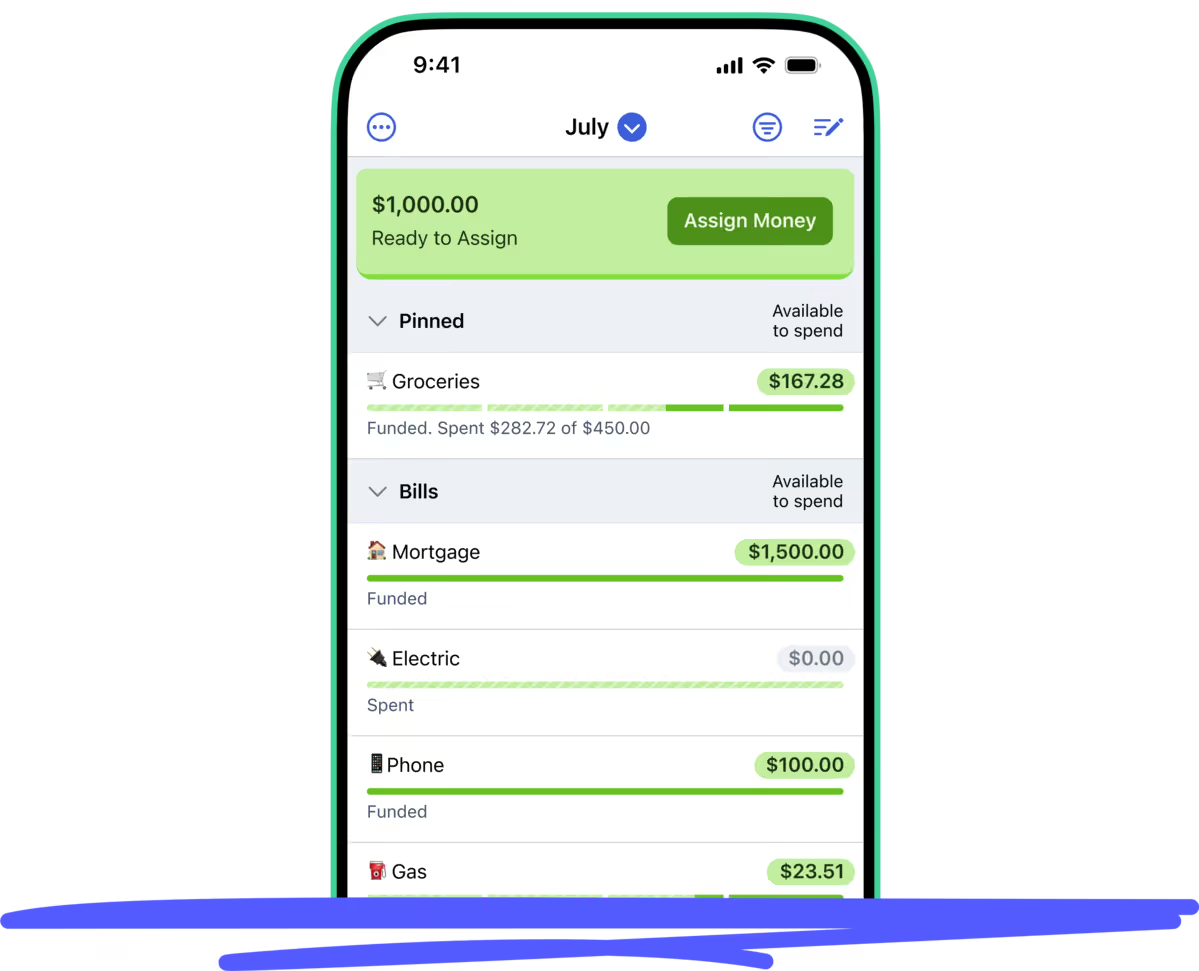
And then you do something wishful thinking never allowed: you plan for the future you actually want.
Trips stop being vague ideas. They become categories you fund a little at a time. Big goals stop living in the “someday” column and start getting real dollars behind them. When the moment comes to spend, you’re not hoping it’ll be okay—you know it will because you planned for it.
That’s how the YNAB app and method work together to quiet the worry. You’re no longer reacting, refreshing, or crossing your fingers. You’re making trade-offs on purpose, adjusting when life happens, and moving forward with clarity instead of guesswork.
This is the moment in the story where you stop waiting for circumstances to change and realize you can shape what comes next. From the moment you start the YNAB free trail, the future will feel less like something to fear and more like something you’re actively building.
From Wishful Thinking to Never Worrying About Money Again
If you’ve ever worried about money, you’re not alone. Most of us were never taught how to do this. We were taught how to track, how to check balances, how to hope for the best, and then we blamed ourselves when the worry didn’t go away.
Being “bad at money” isn’t a character flaw—it’s a skill gap. YNAB is here to teach that skill, because you deserve a full life without money worry lurking behind every decision.
Wishful thinking keeps you stuck in worry because it pushes every hard decision onto some future version of you. YNAB brings those decisions into the present, where you actually have power: helping you get good at money and never worry about it again.
Money worry isn’t just “how adulthood is,” and being bad at money isn’t a life sentence. Get YNAB, get good at money, and never worry about money again.
FAQ's
What is YNAB?
YNAB is an app that helps you get good at money so you never have to worry about money again. It helps you give every dollar a job, plan for future expenses, and break the paycheck-to-paycheck cycle. The average YNAB user saves $600 in their first month and $6,000 in their first year.
How does YNAB help you get good at money?
YNAB gives you a clear, step-by-step method so you can finally stop worrying about money. Instead of hoping things work out, you decide what your money needs to do—one dollar, one category, one month at a time. That clarity replaces stress, late-night math, and “I hope this goes through” worry with calm confidence. It's not about perfection. It’s about finally having a system that works for you.
How do I get started with YNAB?
The easiest way is to jump into the free 34-day trial. Set up your first categories, start assigning dollars, and you’ll immediately feel more clarity and control. Need guidance? The Ultimate Get Started Guide walks you through every step.
What does the YNAB free trial include?
You’ll get full access to the app for 34 days—no credit card required. That includes the web app, mobile apps, bank syncing, and every feature. You’ll also get access to free live workshops, help docs, and a friendly support team if you need a hand.
Do I need to be good at money to use YNAB?
Not at all. Most people start YNAB because they don’t feel good at money. YNAB isn’t about being perfect, it’s about building small habits that help you feel more confident and in control. And yes, you can totally learn it.
Can I use YNAB with a partner or family member?
Yes! YNAB works great for couples and families. With YNAB Together, you can invite up to five loved ones with a single subscription, at no extra cost—so everyone stays aligned on financial decisions. With a separate login, they can build their own plans or collaborate on a shared plan with you.


