.svg)
.png)



.avif)
When Your Pet Needs You Most: How to Make Money One Less Thing to Worry About
.avif)


Quick Summary:
YNAB gave Erin the clarity, flexibility, and peace of mind to navigate the emotional and financial weight of end-of-life pet care with presence and purpose.
- Clarity: With a clear view of your money, you can prioritize emergencies and medical care without second-guessing or panic.
- Flexibility: Margin built into multiple categories made it easier to adapt when costs shifted suddenly.
- Alignment: When your spending reflects what matters most, even the hardest decisions can feel steady, intentional, and free from regret.
A gentle editor's note: This story includes themes of pet loss and end-of-life care.
When life hands you something hard—really hard—the last thing you want is for money to make it harder. And yet, that’s exactly what happens sometimes. A medical emergency, an unexpected goodbye, or a change in plans often comes with another quiet layer of stress:
Can I afford to do the right thing?
That’s where a thoughtful spending plan can change everything. When your dollars already have a purpose, you’re not scrambling to react. You’re responding—with clarity, with calm, and with the ability to stay focused on what really matters.
That’s exactly how I felt during a recent emergency with my senior dog, Elsa. Her final weeks were full of hard decisions, and I’m grateful that money wasn’t the loudest voice in the room. Here's how YNAB helped me stay grounded through it all.
When a pet emergency becomes a financial emergency
In September, I lost my senior dog, Elsa, after a cascade of medical issues that proved too much for her aging body to overcome.
The last month of her life brought one complication after another—several vet visits and a level of worry I hadn’t felt before. I’ve had many pets, and I know end-of-life care can be expensive. It’s part of loving them well.

When preparation meets reality
Even with all that preparation, there was a moment when the costs started to rise so quickly, I found myself wondering if I’d be able to keep saying yes to her care. That kind of worry was new for me. But when I opened YNAB, instead of feeling overwhelmed, I found clarity.
I hear from YNABers all the time who face this kind of moment. Maybe it’s a medical bill, a car repair, or travel costs for an unexpected family emergency. No matter what it is, it feels urgent—and expensive. That’s when the way you’ve been planning really starts to matter.
I could see exactly how much money I had set aside for her care, how much I could move from other categories, and what tradeoffs I’d need to make. It didn’t make the decisions easy, but it made them possible.
Making space for pets in your YNAB plan
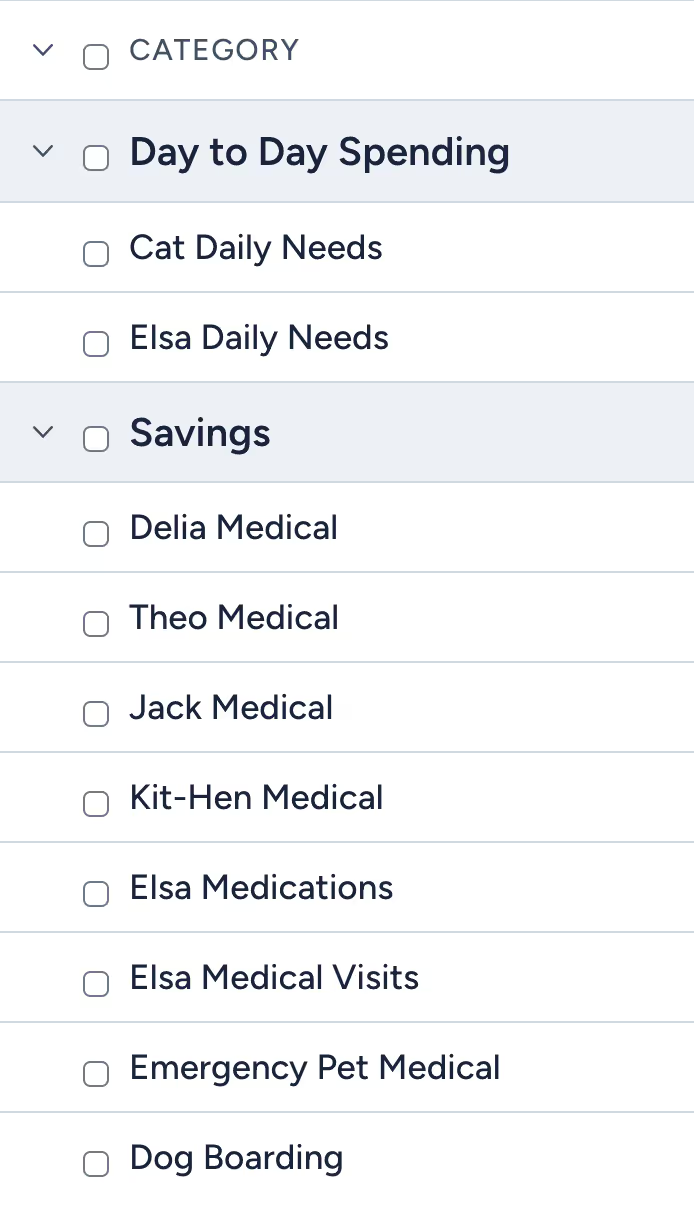
Elsa was on a special diet and had daily medications, so in YNAB, she had her own categories for each—food, meds, and vet visits. Because I have several pets, I also keep an “Emergency Pet Medical” category that any of them could draw from if something unexpected comes up.
It might sound like a lot, but breaking things down that way gave me a clear picture of what I needed to fund each month—and what was already covered. It wasn’t just helpful. It was grounding. That structure gave me confidence long before anything went wrong.
The final diagnosis: When worry crept in
In the last week of her life, Elsa was diagnosed with a challenging medical condition that required daily monitoring and daily checkins at the vet. At the time, the vets believed they could get her through it—but once I heard the care plan, I knew my spending plan was going to need some real adjustments.
After an up-and-down summer of various illnesses, this new diagnosis made me pause. I started to wonder: Can I manage this?
When it comes to my pets, especially near the end, it’s deeply important to me to try reasonable treatment options. If euthanasia might be on the horizon, I want to know—truly know—that I did what I could.
Every night that week, after getting home from the vet, I’d open YNAB and ask myself the same questions: Is there enough in her medical category for this? What adjustments do I need to make? YNAB didn’t give me more money, it gave me clarity. I could see my options, and that helped me stay grounded, even in the unknown.
I pulled from my Emergency Pet Medical category, obviously, but after the summer we’d had, there wasn’t much left in there. So I made more adjustments. I pushed a few savings goals out a bit further. I cut back on over-funding in places where I could. And then I just sat there, staring at my screen.
It’s going to be okay, I told myself. I can cover this.
But the truth is it wasn’t okay. Despite everything, Elsa became too weak, and in the end, I had no choice but to let her go.
Still, I knew I had done my best for her. I had given her every reasonable chance to recover. And knowing that made it possible to let go without regret.
Knowing this allowed me to be fully present with her at the end.

Giving my dollars purpose
I couldn’t control the outcome, but I could say yes when it mattered. I could adjust, reprioritize, and respond—not from fear or confusion, but from clarity. That’s what it means to spend in alignment with your values—even when the outcome is heartbreaking.
Sure, I’d have more money today if I hadn’t adopted her. But I’m an animal person through and through, and every decision I made for Elsa was a reflection of that. I wouldn’t be me without animals in my life—and I wouldn’t have had the time I had with her.
My spending plan held so much more than numbers. It held my values.
.avif)
The truth is peace of mind doesn’t come from just having money—it comes from knowing what that money is for. YNAB helped me make room for what mattered and reminded me that when your spending reflects your priorities, even the hardest moments can feel grounded in purpose.
I’ve talked a lot about the logistics and the money and the planning, but of course, none of that is really the point.
The point was Elsa.
More than the money
I don’t want you to think Elsa’s life was all about her diagnosis or the time we spent at the vet. She was part of my daily life in all the best, most ordinary ways.
Every walk started with a solid ten minutes of sniffing at the waterfront park. The Queen had no interest in efficiency and absolutely no sense of urgency. Lazy was her middle name.
She could eat around a pill and spit it out like a toddler dodging vegetables. And when a new foster dog arrived, she welcomed them the way a good host hands you a blanket and points you toward the couch. With cats, she was all softness—no tension, no chase, just quiet acceptance and a little tail wag.
Treats were always accompanied by a tiny, joyful snort—right as she took them. I called it her cookie snort, and it got me every time.
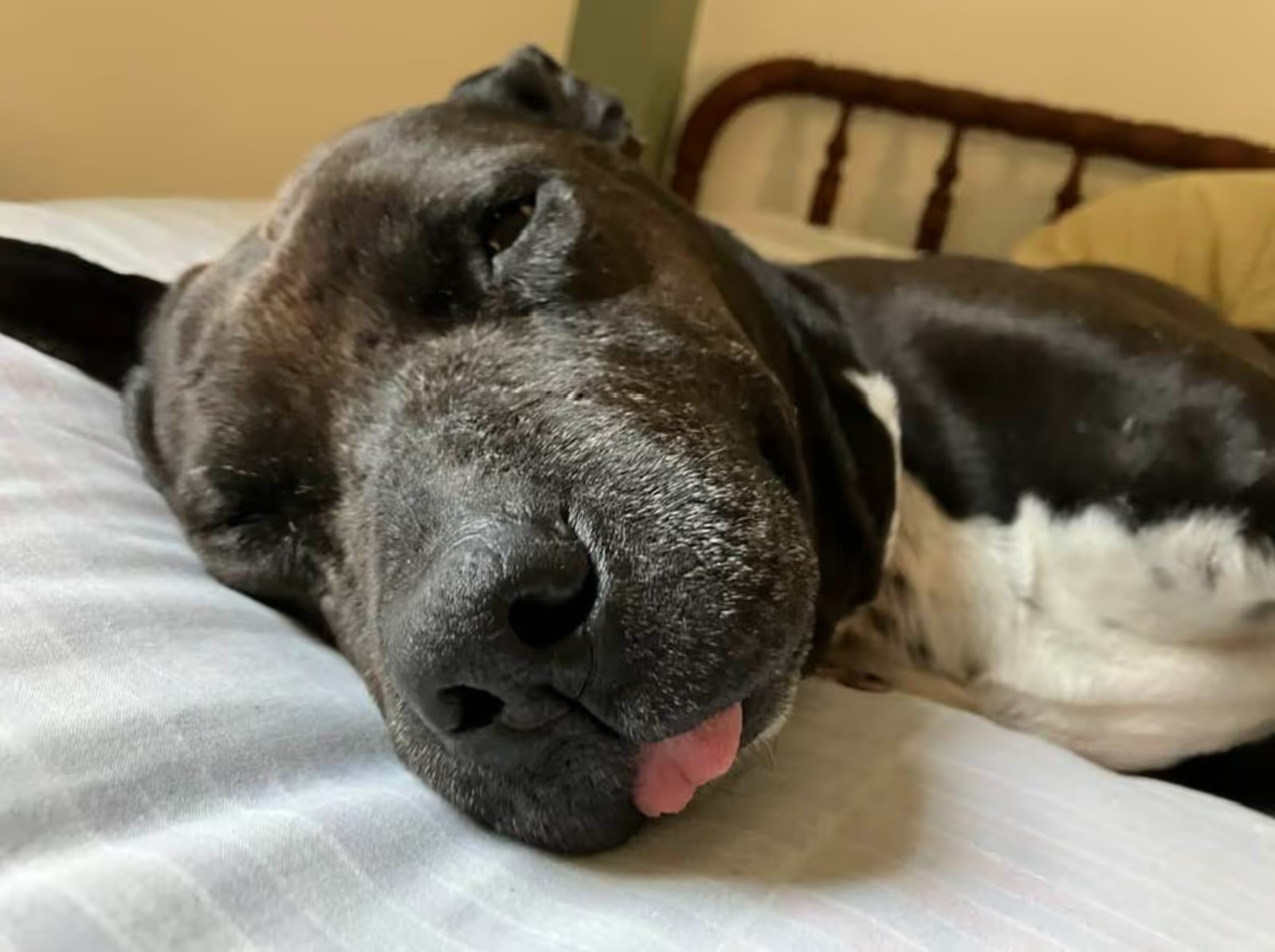
She was a good dog. I’m grateful I got to spend her final chapter with her—fully present, not consumed by money stress.
Medical emergencies don’t have to be made even harder with money worry
I know not everyone is an animal person. But we all have something—or someone—we want to show up for when it counts. A kid. A partner. A friend. Ourselves.
When your spending reflects your priorities, even the hardest moments can feel grounded and clear. That’s what YNAB made possible for me. It didn’t erase the heartbreak. But it gave me a plan I could trust when everything else felt uncertain.

Do you ever worry about money? You’re not alone. YNAB gave Erin clarity, calm, and the ability to show up when it mattered most. You can have that too. Get good with money, and never worry about money again. Try YNAB free for 34 days.
Good With Money: A Look at Real YNABers
YNABer Jenna J. wrote in to share how much it helped her heart to have a dedicated pet category for end-of-life care.
.avif)
My husband told me 14 years ago that it was important to him to always have money set aside for our cats for emergencies. That was the first category we created. While having Covid, we had to put our cat down, but we didn't have to worry about the cost. We still have the category in case we adopt another.
FAQ's
Q1: How can YNAB help during an unexpected pet emergency?
A: YNAB gives you a calm, clear view of what’s possible—right when everything feels urgent. With dedicated categories and the ability to shift money around, you can focus on caring for your pet instead of panicking about the bill.
Q2: What if I haven’t saved enough for a sudden vet cost?
A: You’re not stuck. YNAB helps you move money from lower-priority categories, delay some goals, and make thoughtful tradeoffs so you can still show up for your pet in the moment.
Q3: Does using YNAB make these emotional decisions easier?
A: It doesn’t soften the heartbreak, but it does give you clarity. When you know what your dollars are for, you can spend in a way that feels aligned with your values—even on the hardest days.
Q4: How do I know if I’m making the “right” spending choice in a crisis?
A: If your spending reflects what matters most to you, that’s the right call. YNAB simply gives you the structure to see your options clearly and act with confidence.


.png)
